Notes from the workbench: the art, the movement, and the small decisions that turn a concept into something you can play.
PARALLAX / ATMOSPHERE / RECORDING
A city with depth.
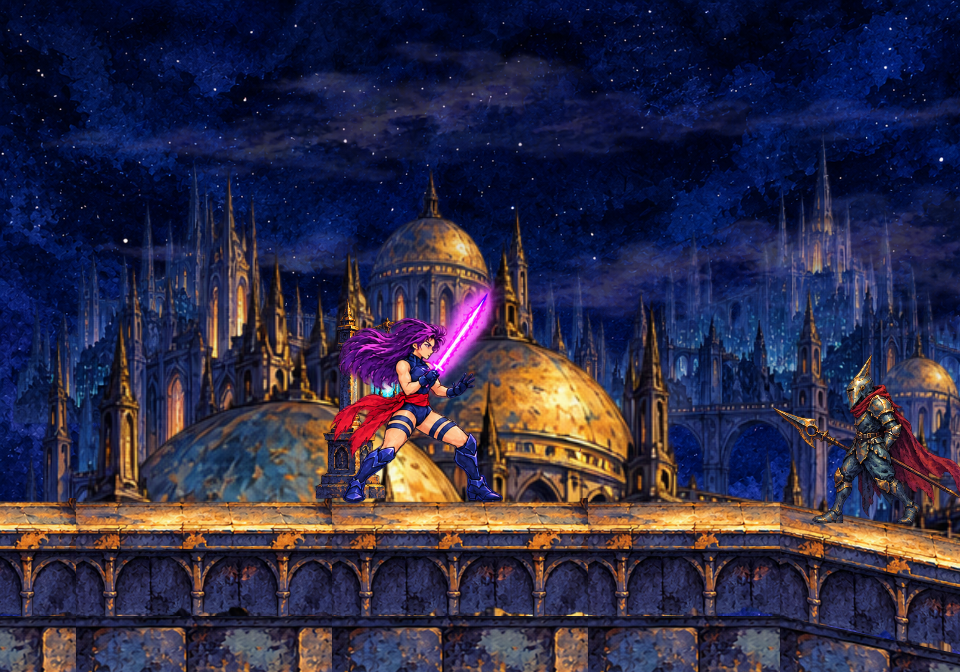
The city began as one detailed painting. This pass separates its sky, distant skyline, middle citadel and nearer architecture into independent raster artwork. Each depth moves at its own camera rate, while the playable roofs stay in the game world.
Let the atmosphere move.
Clouds and smoke have their own transparent layers. Slow cloud drift and a restrained smoke motion give the view life even between runs. Small painted light glows pulse on the architecture instead of sliding across it. The operating system's reduced-motion setting freezes atmospheric animation and light pulses.
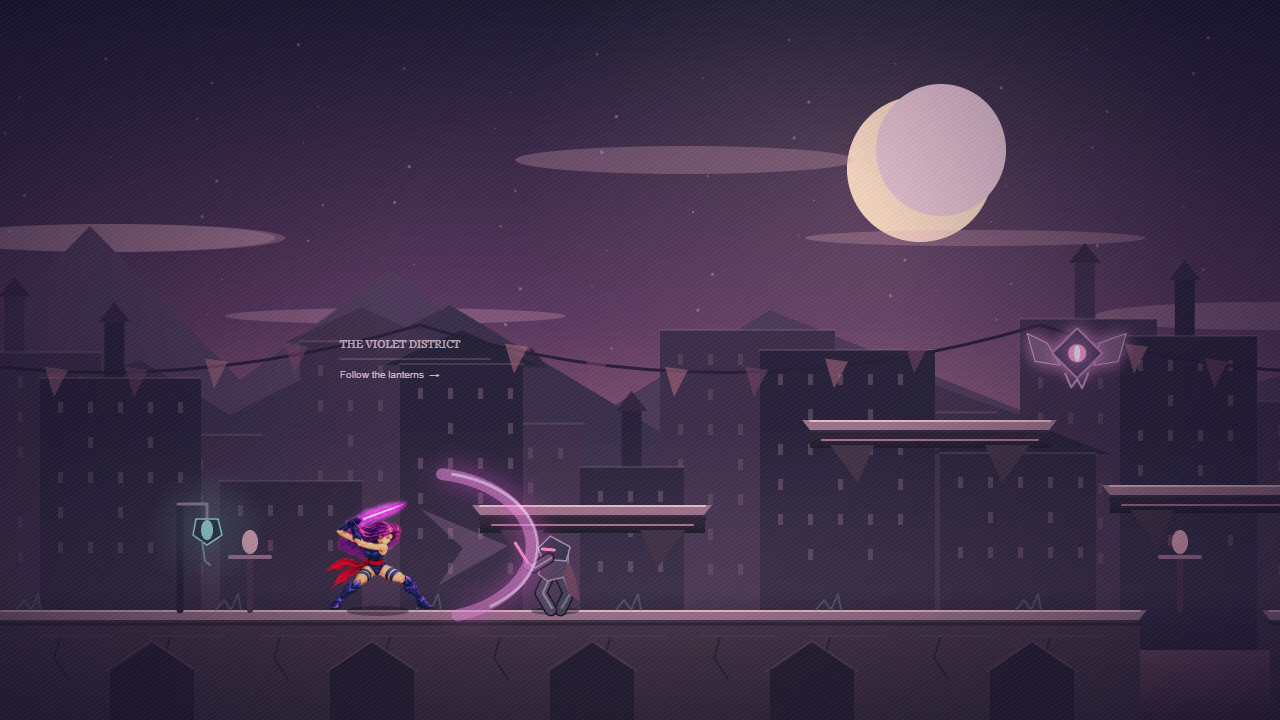
Actual prototype gameplay · Build 0.4. Every illustrated layer remains raster artwork.
Keep a clip from the workbench.
The supplied recording handoff is now integrated in testing mode. It captures the complete fixed game window, including the HUD and menus, after the browser's tab-sharing approval. Completed recordings can be reviewed and saved; Keyeske.com publication is an explicit choice through the private recording helper.
The Keyeske integration lives on the backend. The game contains no publishing credential. This prototype still has sound off; its recording audio bus is ready for future game sound.
The crouch, low slash and forehead-butterfly psychic force remain part of this build. Character animation cleanup is still on the workbench.
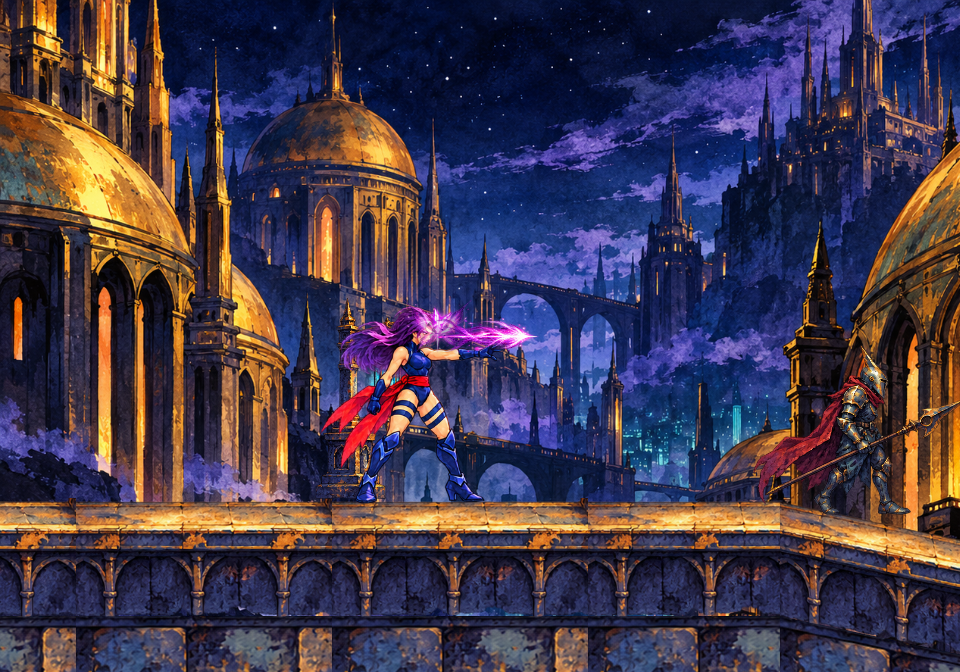
Psylocke now has a stationary crouch and a special that begins at her forehead: butterfly-shaped psychic light gathers, then a painted force projectile fires in the direction she faces.
Get low. Keep the cut.
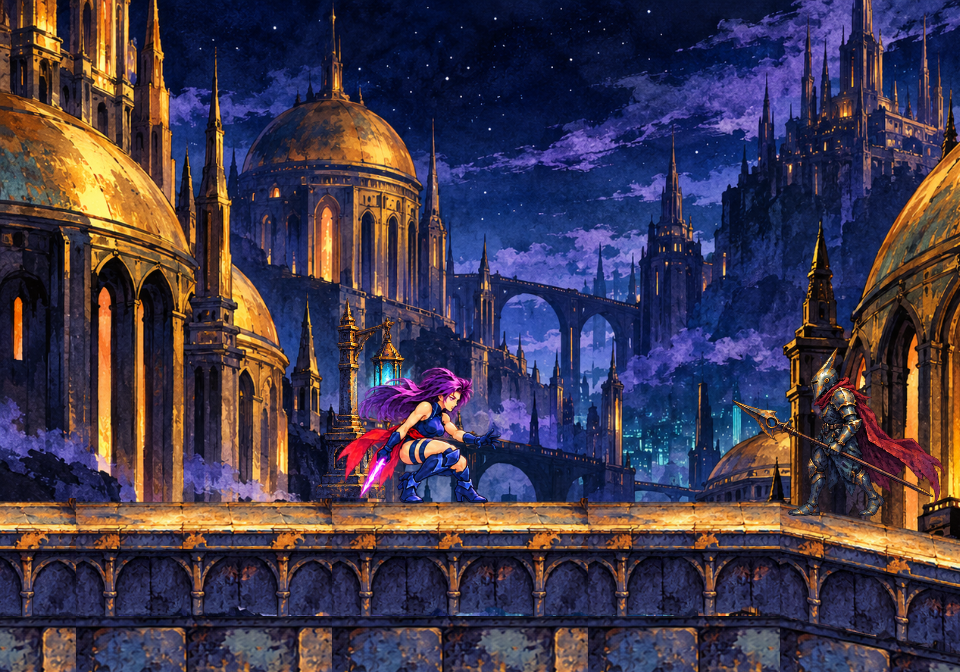
A direct check of the supplied Strider binary shows a deep stationary duck, around 40 pixels high against the 62-pixel standing character. It does not crawl when forward is held, and its slash is lower. Psylocke's crouch follows that proportion and intent: hold Down or S, then tap J for a low cut. Her collision profile lowers with the pose, and she stays down if there is insufficient room to stand.
Hold Down/S for a stationary crouch; J performs the lower slash.
The butterfly is the tell.
Tap L or C for a brief focus. A violet butterfly gathers around her forehead before a psychic projectile leaves that point. The blast hits enemies, bursts against solid terrain, and expires after a short flight. A cooldown keeps the special deliberate, with its readiness shown beside the health display. It is separate from her sword attack.
Actual prototype gameplay · Build 0.3. The forehead aura, force projectile, crouch and focus poses are raster artwork.
Touch controls include DUCK and PSI; a compatible gamepad uses D-pad down and Y. The previous scale, sloping roofs, travelling jump and short moving slash remain the foundation. These painted poses still need frame-continuity cleanup as the animation develops.
The first course worked, but its proportions and repeated floating platforms made it feel like an exercise. This pass begins with direct frame captures from the supplied Genesis Strider binary, then uses what those captures show to revise Psylocke's scale and motion.
The character has to own the screen.
Hiryu's visible body is roughly 62 pixels tall on a 224-pixel-high screen: about 28%. Psylocke's original standing art was around 14% of her view. That difference changes how close a ledge feels, how far an enemy seems, and whether a slash has weight. Build 0.2 moves toward the larger proportion and a view shaped around it.
Direct reference observation
What it changes here
Four run drawings, held six frames each
A registered four-phase loop, with a roughly 0.4-second full-speed cadence
A broad crescent visible for five captured frames
A short strike and recovery, with our impact window tied to the painted strike
Running continues through the slash
No movement stop during an attack; tap for each cut
Upright standing jump; drawn flip when travelling
Separate standing and travelling jump behavior and animation
Connected slopes, valleys, gaps and climbing routes
Solid sloping roofs, a deliberate gap, and a raised roof in the new test route
The reference's standing jump rises about 97 native pixels; its travelling jump rises about 76 while moving faster horizontally. Those are starting constraints for the prototype. The visible sword crescent does not reveal Strider's internal damage box; our combat window is a new implementation, synchronized to our own imagery.
Painted pixels, all the way through.
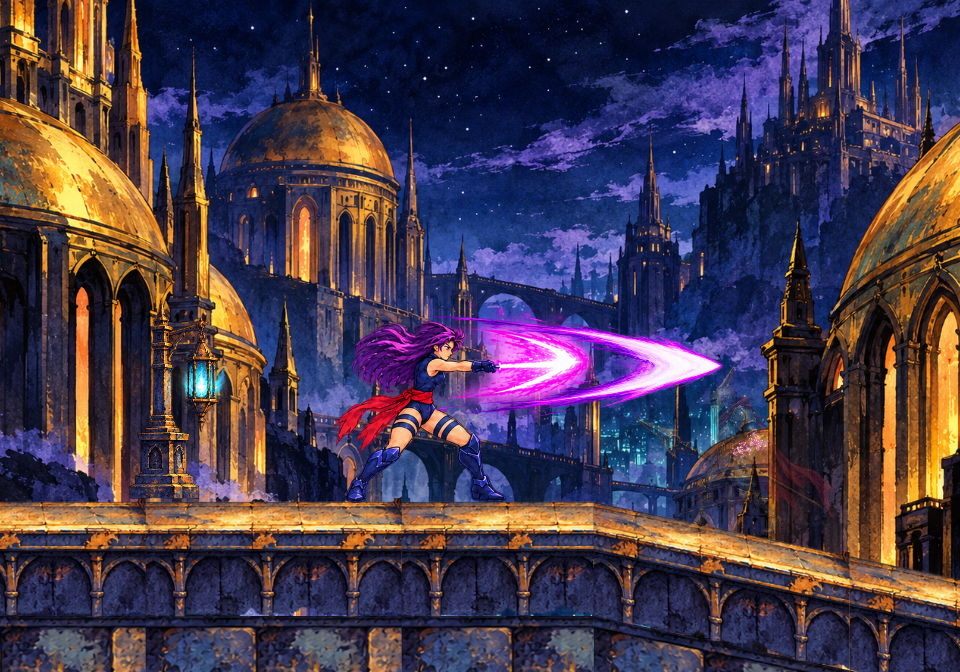
The title now has a proper ink-and-gouache raster logo. Painted citadel architecture, roof pieces, sentries, drones, lanterns and psychic effects replace the geometric scene drawing. The new palette separates copper-gold landmarks from deep indigo and teal, so the character can stand out against the world.
Actual prototype gameplay · Build 0.2. Painted raster art, a larger character, and a roof route informed by the direct study.
The animation is still on the workbench.
The new run study keeps body size and foot registration steadier, and the slash and travelling jump have their own frame sequences. The run uses four selected phases; an additional generated row repeats the same leg phase and is excluded. Opposing strides, arm swing, hair and sash continuity still need cleanup. These are animation studies, not finished production sheets.
Study scope: direct, unassisted run, jump and attack measurements were captured from the supplied binary. The stage skim covered the opening roof route, gap, and later wall/overhang and descent sections; it was not a full stage or boss clear. One later architecture inspection used a documented position skip. A checksum-header correction was required to boot the supplied dump; the source file is unchanged.
Today we're beginning Psylocke Running Slash: a side-scrolling action-platformer built around speed, clean jumps, and a psychic sword. The starting point is simple: get the movement feeling good, then build a world worth moving through.
Two references, one direction.
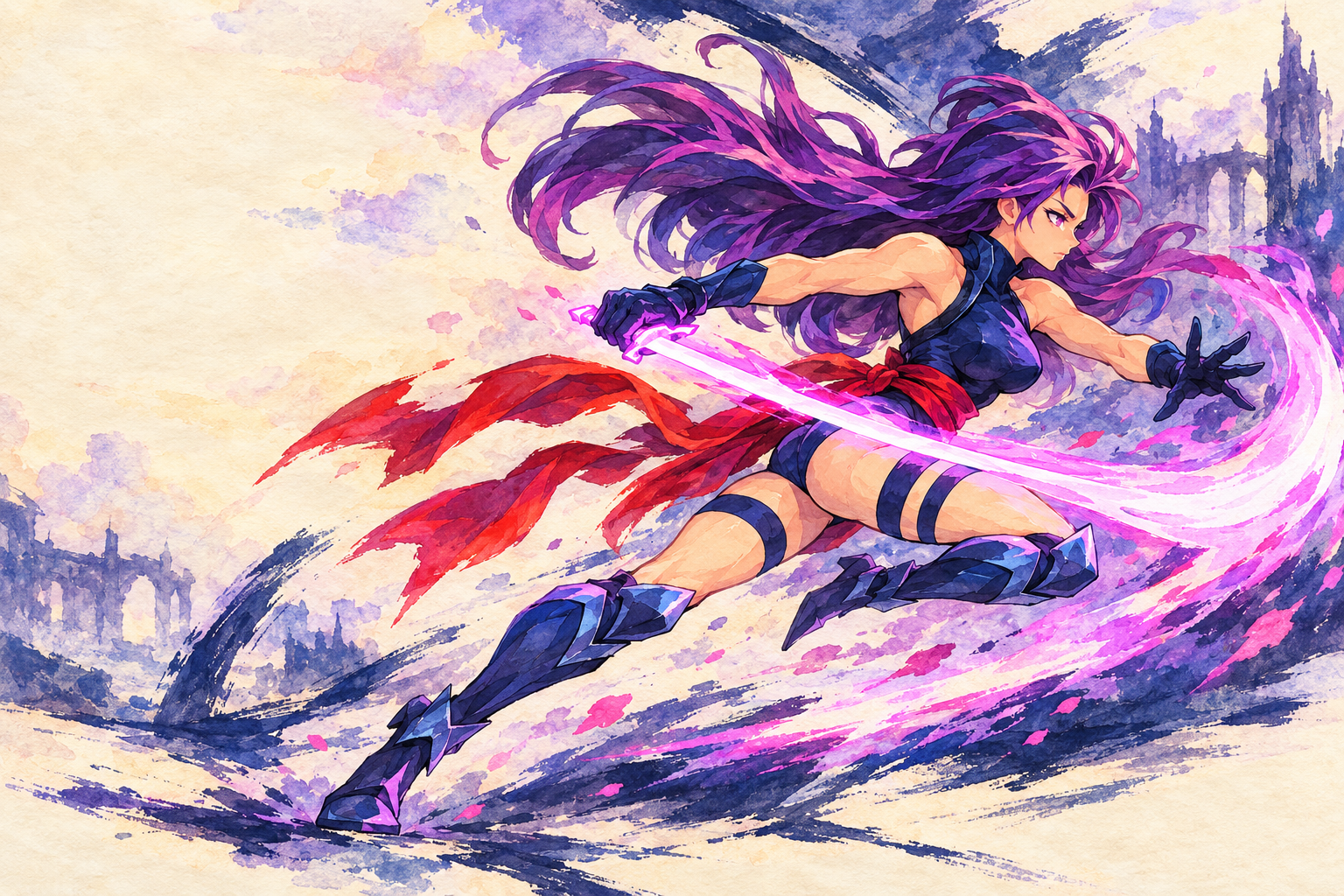
The supplied fantasy illustration sets the medium: expressive ink, layered watercolor, and vivid light against deep shadows. The Psylocke character image sets the design: violet hair, navy clothing, a crimson sash, and a luminous psychic blade. The first running-slash concept combines those directions in a new pose.
That design will guide the animation work. Hair and sash should show momentum, the body should lead the action, and the slash should read clearly even when everything is moving.
A small course with a clear purpose.
The first browser build is a rooftop movement study. You can run, jump between platforms, dash, slash enemies, and work toward the end of the course. Checkpoints and a restart let us repeat the same sections while testing the controls.
Actual prototype gameplay · Build 0.1. Level geometry and animation are work in progress.
Strider for the Genesis is the movement reference. The supplied binary has been identified and recorded for local reference. This build uses new browser game code; the binary is separate from the public download and website.
Where the visuals stand: the running-slash key art is generated concept artwork. The first playable uses early animation and simple level art to test movement. A complete, polished painted animation set is still ahead.
The next passes.
NOW Tune running speed, jump arcs, dash recovery, and slash timing.
NEXT Refine idle, run, jump, slash, and dash frames around the character reference.
LATER Expand the course into a full stage with richer art, encounters, and sound.
The journal will record each build as it develops, including what is playable and what still needs work.