Skip to journal entries
FINAL FANTASY VIITHE FIGHTING GAME

Notes from the Planet

Final Fantasy VIIDevelopment Journal

A growing record of the fighters, the artwork and the battles that bring this fan game to life.

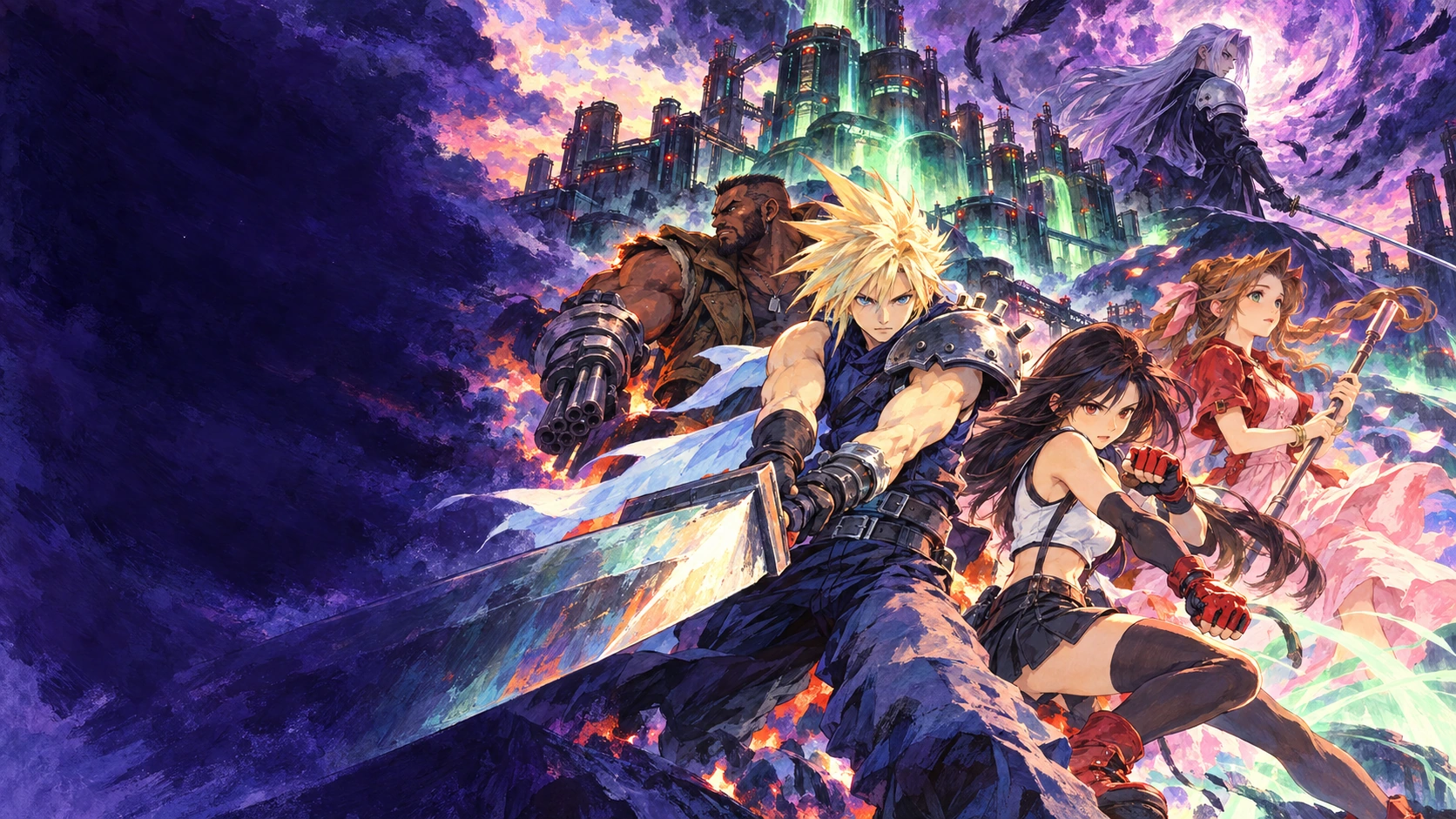
The original painted cover: Cloud, Tifa and Aerith above Midgar, with Sephiroth beyond
The first painted cover · October 22, 2026

Tifa finds her footing.

Eight painted stepping poses give Tifa steadier, grounded fighting footwork.

A steady guard

A new guarded stepping cycle replaces the abrupt changes between the old movement poses. Her body stays aligned while her boots move through low fighting steps, with the same watercolor, gouache and ink treatment as the rest of the cast.

Steps that follow the movement

Her cadence follows the distance she moves. Walking backward plays the cycle in reverse, changing direction keeps the current step, and stopping against a wall stops the footwork. Pausing holds the pose.

Reviewed in the arena

Forward and backward movement were checked on both sides of the stage, together with jumps, guards, attacks and damage reactions. The gallery now includes all eight dedicated stepping drawings alongside her sixteen combat poses.

Movement and artwork reviewed

All eight poses loaded in both rulesets and both player positions. Native checks confirmed stable direction changes, grounded soles, wall and pause behavior, and 6,000 unchanged combat snapshots. Desktop and phone browser layouts passed without missing files or JavaScript errors.
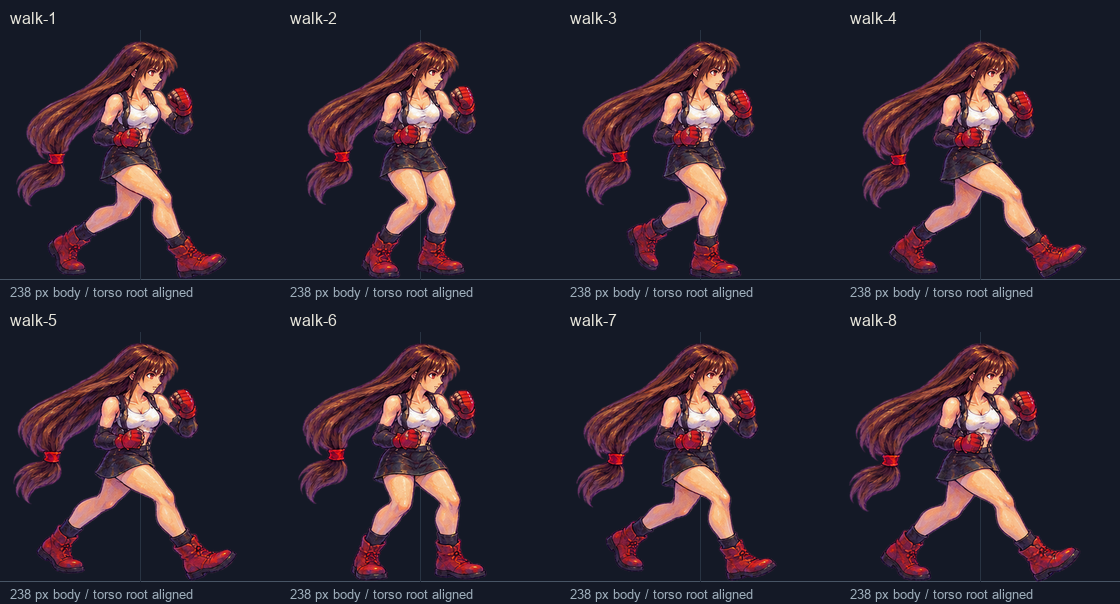
Eight painted Tifa guarded stepping poses with a stable upper body and grounded boots
Art review · Eight drawings keep Tifa in a steady fighting guard as she steps.
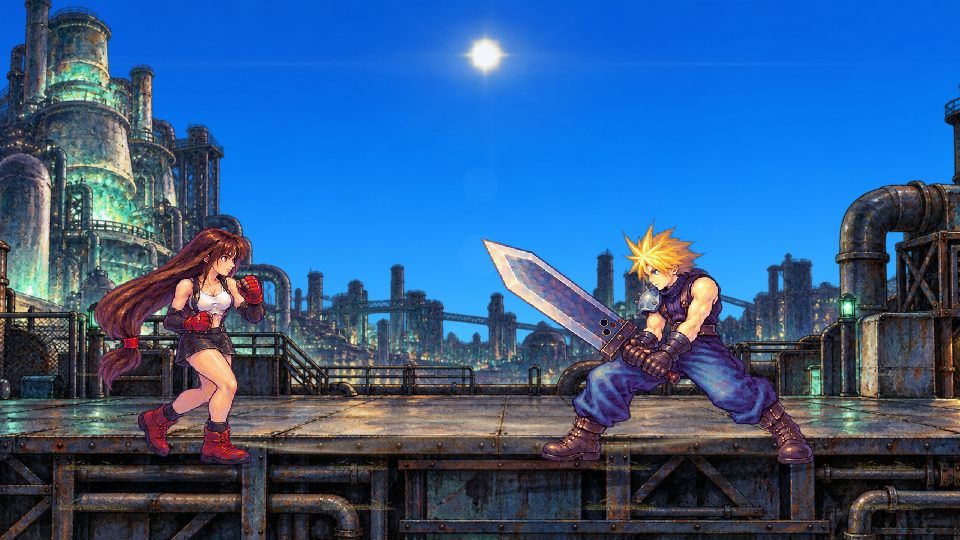
Actual gameplay showing Tifa stepping forward across the Midgar arena toward Cloud
Actual gameplay · Tifa takes a grounded guarded step across Midgar.

Masamune reaches further. Super Nova awakens.

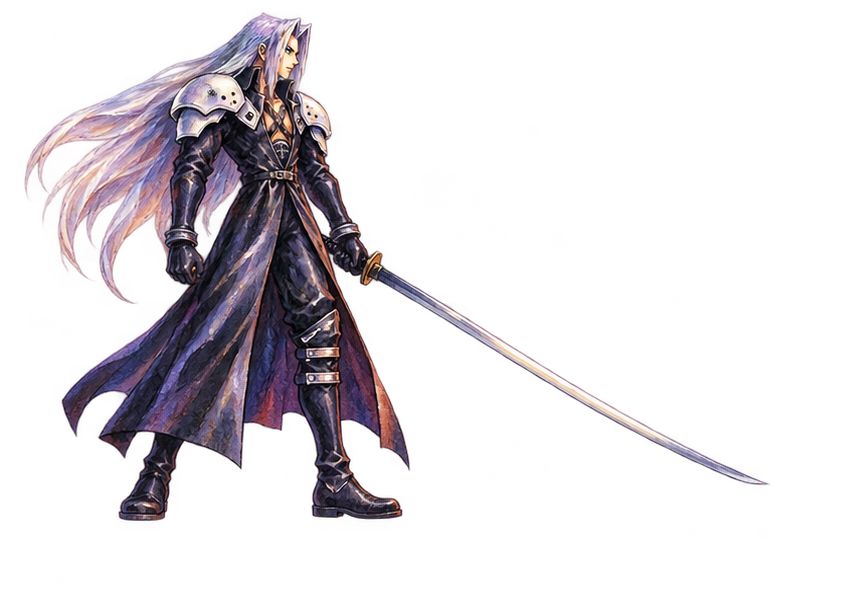
Sephiroth receives sixteen long-blade illustrations and a brief Safer Sephiroth transformation for his Super.

The full Masamune

Sixteen newly painted normal poses keep the long Masamune intact. Body and boot anchors keep Sephiroth planted as the blade moves; extended sword attack ranges match its new reach.

Safer Sephiroth

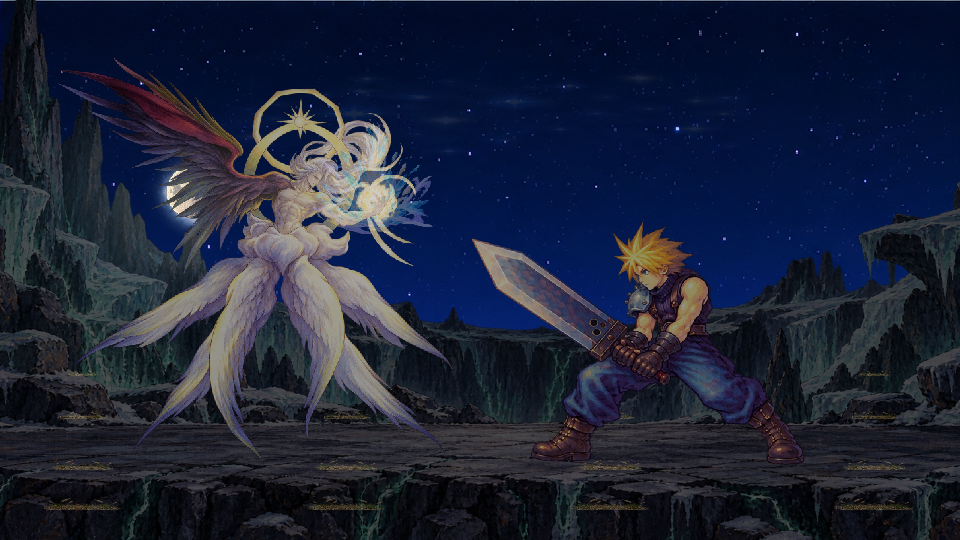
Four additional painted poses follow the original final form: a silver-haired torso, linked golden halos, six white wings below and a single dark arm-wing. A full Limit meter transforms Sephiroth to charge and release Super Nova, then return to normal.

A battle with counterplay

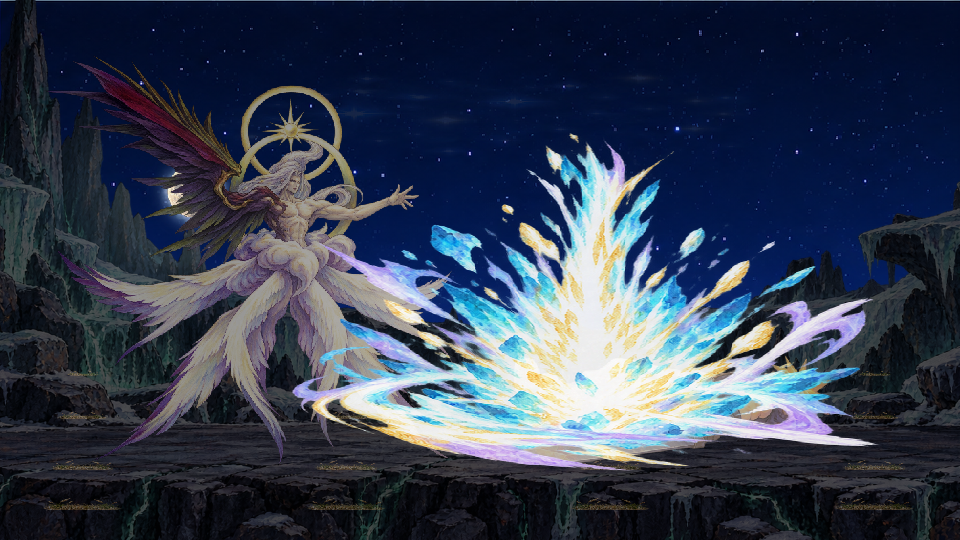
Super Nova is a compact fighting-game adaptation of the original cosmic attack. Its single forward blast can be guarded or parried, and opponents can interrupt the charge. The transformation ends when the move finishes, is interrupted or the round ends.

Playable artwork and Super reviewed

All twenty Sephiroth poses loaded in the gallery. Real keyboard play confirmed long-blade contact, all four Super Nova phases, one native blast, guarding, interruption and return to normal. Phone spell and Super Nova buttons also passed at 390 pixels.

Painted Sephiroth ready stance holding a long Masamune with the entire sword visible
Art review · The longer Masamune and the revised ready stance.
Actual gameplay showing winged Safer Sephiroth charging Super Nova across from Cloud at night
Actual gameplay · Safer Sephiroth charges Super Nova in the Northern Crater.
Actual gameplay showing Safer Sephiroth releasing a bright forward Super Nova blast toward Cloud
Actual gameplay · The native forward blast lights the fighters before Sephiroth returns to normal.

Jenova towers over the arena.

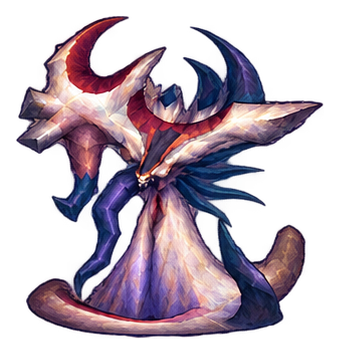
The original polygon battle model guides a new sixteen-pose sheet, with a towering body and attacks sized for the arena.

Follow the battle model

The original battle model guides Jenova’s vast hooked wing-arms, small inset mask, long lavender body, dark hanging arm, teal spines and curved tail. A dedicated ink and brush pass gives every pose the same illustrated treatment as Cloud and Tifa.

A large body with real presence

Jenova stands roughly 1.7 times Cloud’s height on stage. Her larger collision body can be hit, while longer tendril attacks, higher lasers and a broad tail give her room to control space. A lower boss jump keeps her inset face and body readable in the arena.

The complete fighter

All sixteen poses use the revised battle form, including movement, guarding, damage reactions, attacks and Materia casting. The cast remains twenty selectable characters.

Large-body combat and artwork reviewed

All sixteen illustrations loaded in the gallery. Native checks confirmed the larger collision body, corner interactions and a low-attack-clearing boss jump. Browser play confirmed stage size, a visible face at the jump apex, real Fire damage, night lighting and a phone layout without horizontal overflow.

Painted Jenova battle form with massive hooked wing-arms, a small inset mask, a long purple body and a curved tail
Art review · The revised ready pose follows the original polygon battle model.
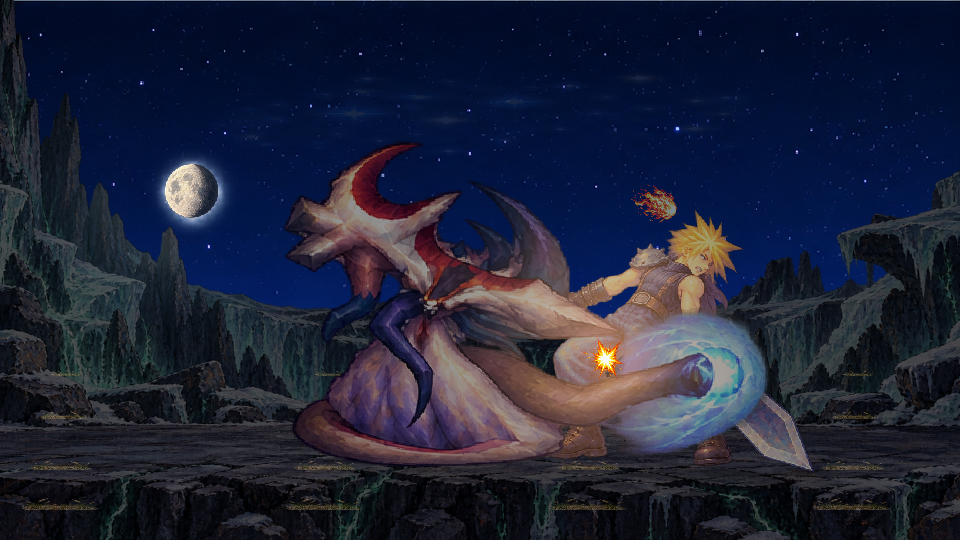
Actual nighttime gameplay showing the giant illustrated Jenova striking Cloud with Fire Materia and lighting both fighters
Actual gameplay · Jenova casts Fire against Cloud; the native hit illuminates both fighters at night.

The conflict grows to twenty.

Ten more characters join the playable cast: new allies, the Turks, Rufus Shinra and Jenova. The expanded roster keeps the same four living arenas and shared combat system.

More of Avalanche. Another SOLDIER.

Zack Fair, Jessie, Biggs and Wedge join the playable roster, each with their own painted character sheet and a distinct inherited fighting archetype.

The Turks step into the ring

Tseng, Reno, Rude and Elena bring the full Turks team into the cast, with separate character artwork, fighting styles and selectable slots.

Shinra and the calamity

Rufus Shinra brings ranged pressure and traps, while Jenova takes a monstrous, heavy-grappling role with broad screen control. Their move sets are fighting-game adaptations of the shared system.

One complete cast

All twenty characters are integrated into selection, practice, local versus and the Lifestream Tour. Each fighter has nineteen tour opponents. Fire, Ice, Bolt and Cure extend to the new cast, and every character has a home among the four existing arenas.

Published on October 22, 2026

All twenty fighters and 340 painted poses loaded correctly. Character selection, the new artwork and Materia support were checked, including playable Jenova, Zack and an upright Rufus.

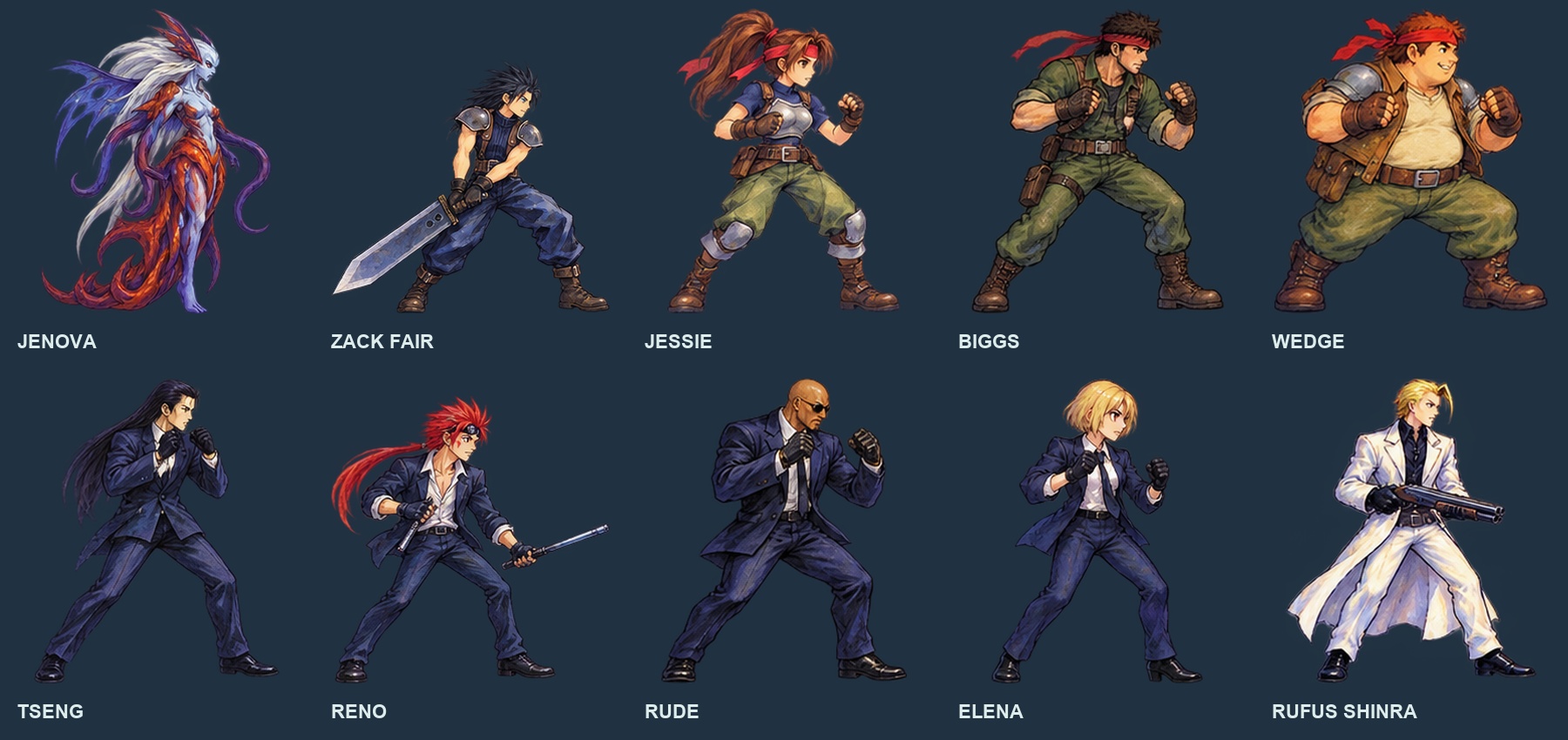
Art review contact sheet showing Jenova, Zack, Jessie, Biggs, Wedge, Tseng, Reno, Rude, Elena and Rufus
Initial art review · Ready poses from the first ten-character expansion. Jenova was later revised using the original polygon battle model.

Cloud takes the lead.

The first dedicated character pass belongs to Cloud: stronger sword poses, his own techniques, a full Omnislash and Materia magic for the entire cast.

A fighter built around the Buster Sword

Thirty-six dedicated painted poses give Cloud clearer Buster Sword attacks, movement, guarding, spellcasting and signature techniques. The watercolor, gouache and ink direction stays at the center of the character work.

Four familiar sword techniques

Braver

An airborne, downward Buster Sword strike.

Cross-slash

Three deliberate cuts in a close-range sword combination.

Blade Beam

A sword release that sends an energy wave across the arena.

Climhazzard

A rising sword attack that lifts Cloud into the air.

Cloud's Limit Break

Omnislash

Fourteen rapid sword strikes lead into a final airborne, descending blow. This is the original game's Omnislash sequence, adapted for a fighting game.

15sword strikes

Materia for all twenty fighters

All twenty fighters can cast Fire, Ice, Bolt and Cure Materia. Spells spend MP, while Cloud's Omnislash uses a full Limit meter. Cast warnings, recovery and colored lighting make magic readable during a fight, especially after sundown.

Published on October 22, 2026

Checked with real player inputs: Cloud's four sword techniques, all fifteen Omnislash hits, Materia MP costs, Cure after taking damage and nighttime lighting. The phone layout was also checked.

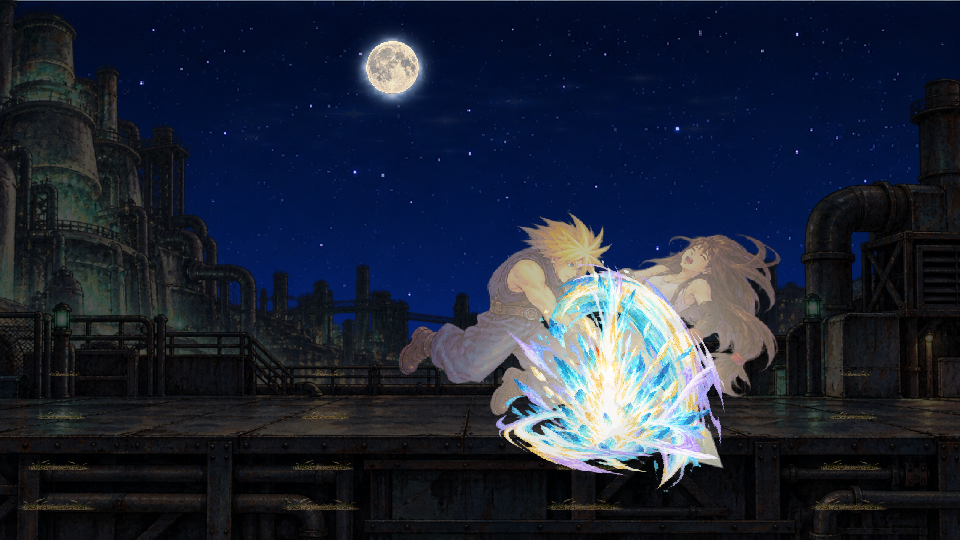
Actual gameplay: Cloud finishes Omnislash against Tifa in Midgar at night
Actual gameplay · Omnislash's fifteenth hit. The descending finish lights Cloud and Tifa in the Midgar arena.
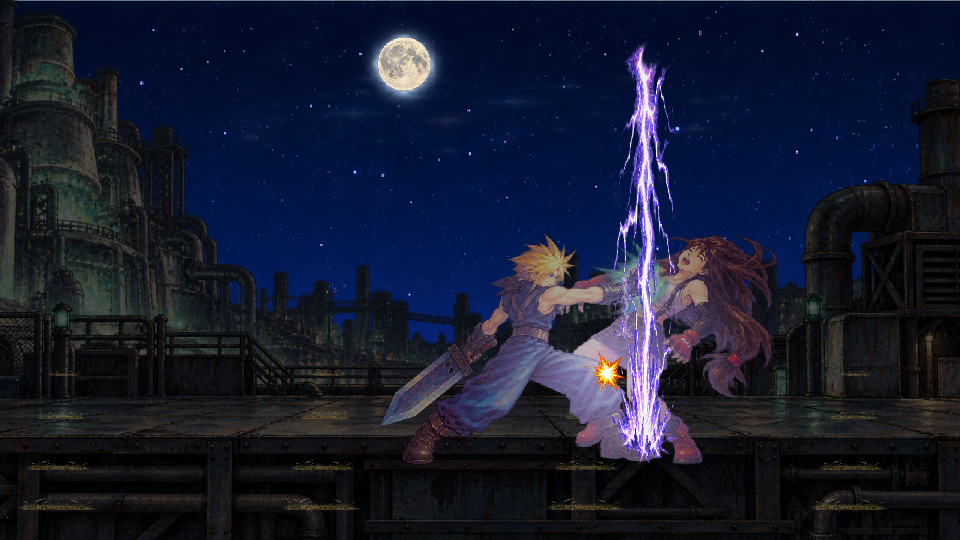
Actual gameplay: Cloud casts purple Bolt lightning onto Tifa under the Midgar night sky
Actual gameplay · Bolt Materia lands after its cast warning, lighting the fighters beneath the night sky.

Ten fighters. One living Planet.

The first playable release brings ten Final Fantasy VII characters into the Fighting in the Streets combat system, with four painted arenas and a sky that moves from sunrise to night.

The party assembles

Cloud, Tifa and Aerith lead a ten-fighter roster alongside Barret, Red XIII, Yuffie, Vincent, Cid, Cait Sith and Sephiroth. The launch build includes local versus, practice, AI battles and the Lifestream Tour.

Four places worth fighting for

Midgar Reactor Skyline, Cosmo Canyon, Nibelheim Mountain Pass and the Northern Crater share sunrise, daylight, sunset and night. Landed hits and special effects cast colored light onto nearby fighters after dark.

A painted beginning

The supplied concept-art reference shaped the watercolor, gouache and expressive ink direction. The first release introduced raster fighter artwork, a painted title cover and a matching website thumbnail.

Published on October 22, 2026

The launch game was checked locally and over public HTTPS, including the roster, game pages, arenas and a real landed hit at night.

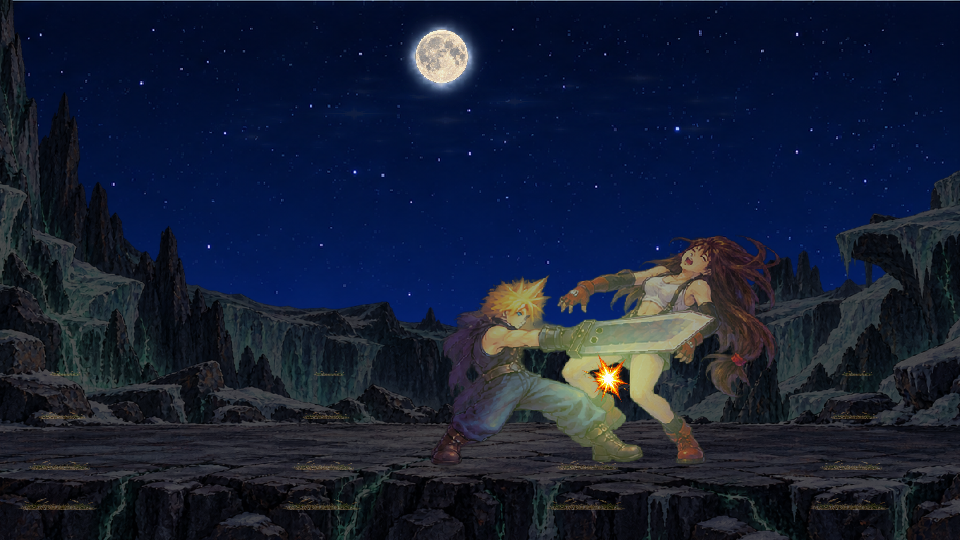
Launch-build gameplay: Cloud lands a hit on Tifa in the Northern Crater at night, lighting both fighters
Launch build · Actual gameplay. A landed hit lights Cloud and Tifa against the Northern Crater's night sky.

The next chapter starts in the arena.

Return to the title screen ↗